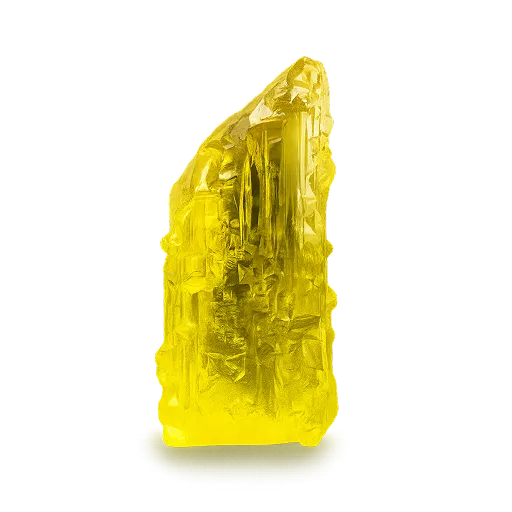
Ukrainian heliodors are iconic in the mineral world. The deposit was first noted by farmers in the mid 1800s when enormous quartz crystals were found in their fields. Few believed that such exotic material could have originated in Ukraine; it was assumed that the crystals were deposited as a byproduct of glacial movement during the ice age. Exploration over the next century revealed immense pegmatite deposits with unbelievable gems! For the rest of this fascinating story, I strongly recommend finding a copy of the Volodarsk-Volynski article that was published in @themineralogicalrecord in 2009.
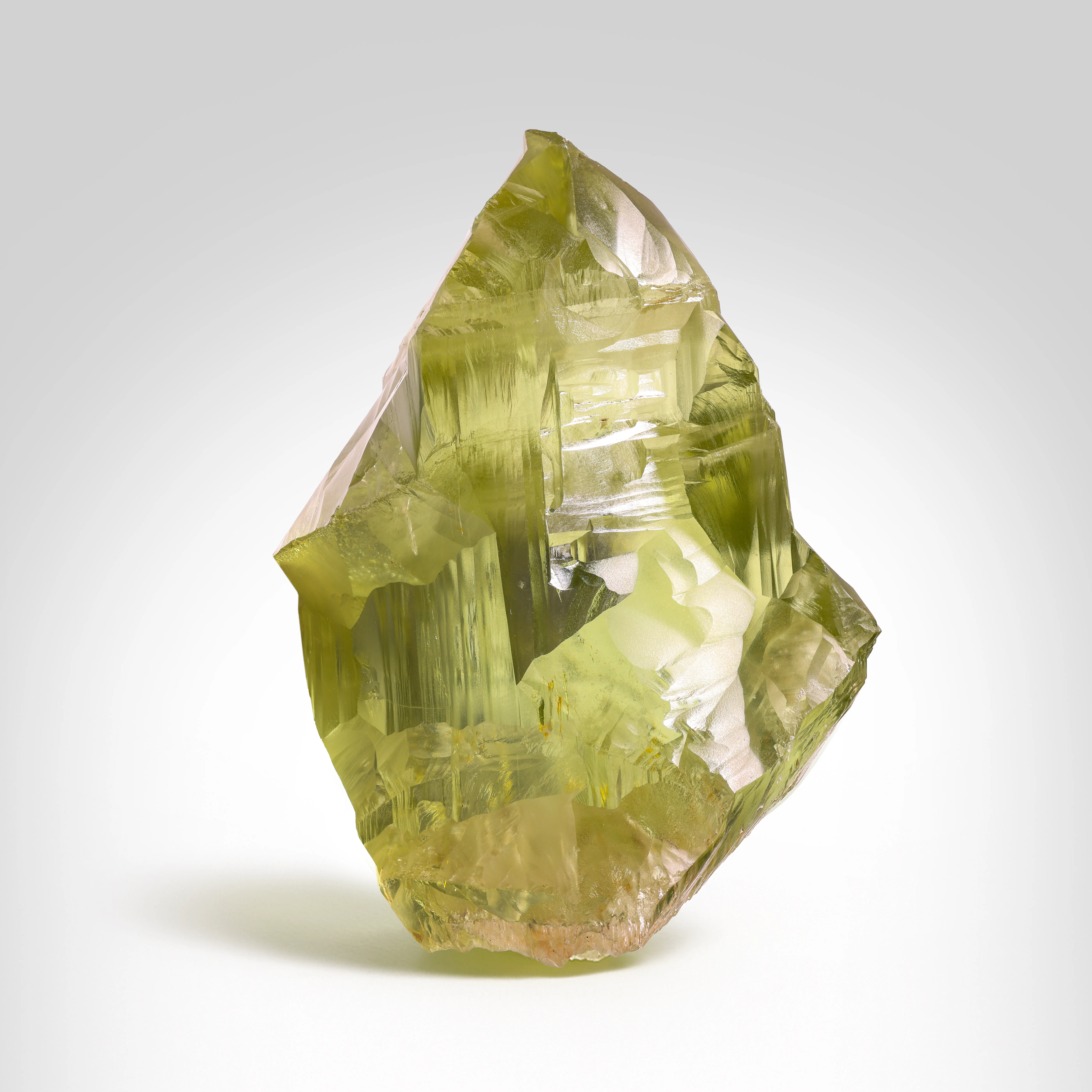
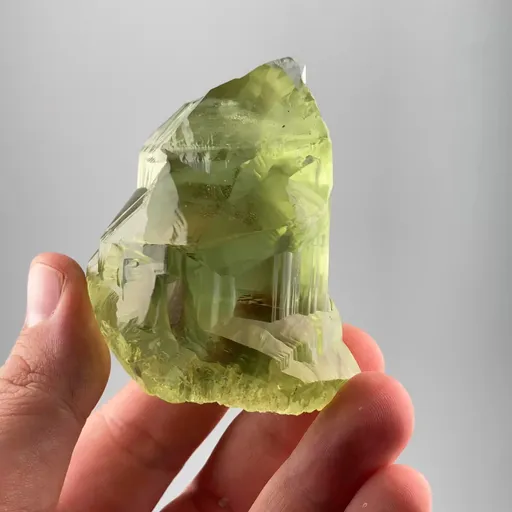
So, what makes a Ukrainian heliodor great? Vivid yellow color saturation, gem transparency, large size, perfect luster, and intricate etchings on the surface. Very few specimens check all of these boxes, making this one even more significant.
Heliodor from Ukraine hails primarily from the pegmatite bodies of the Volodarsk‐Volynskii district in northwestern Ukraine (Zhytomyr Oblast). These pegmatites intruded the late Precambrian crystalline basement (the Ukrainian Shield) and are hosted within a series of granitic dikes and sills. As a variety of beryl (Be₃Al₂Si₆O₁₈), Ukrainian heliodor forms heavily etched hexagonal prisms that have reached almost a meter in length in length. Photo by Mark Cross.